


Italian fishermen for two years incinerated most of the invasive Atlantic blue crabs caught in the Po River Delta south of Venice. Few Italians had an appetite for the alien predator blamed for decimating their prized Manila clams.
While experiments in containment continue, including the release of tens of thousands of octopus predators, the industry's response has been shifting to find new markets for the crustaceans. The strategy is already salvaging the livelihood of some fishermen and, some hope, may even rehabilitate the much-maligned crab's image in Italy.
 Full Story
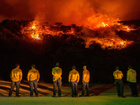
In a strategic retreat in the fight against climate change, the United Nations has acknowledged that Earth has lost its chance to prevent some of the worst of global warming's harms. So now the world must figure out how to get temperatures below the danger zone and back to safety, officials say.
Earth is soon going to exceed the safe temperature threshold agreed upon by the world in the 2015 Paris climate accord because of warming from the burning of coal, oil and gas, according to a bleak first-of-its-kind report issued by the United Nations Environment Programme Wednesday.
 Full Story
In crowded subway cars and sun-drenched plazas, an old-fashioned accessory in Spain has been everywhere thanks to the blistering summer heat.
Small enough to fit into a purse, the traditional Spanish folding hand fan, or abanico, snaps open into a semicircle. With little more than a flick of the wrist, it creates a surprisingly strong breeze.
 Full Story
The death toll from catastrophic flooding in Nepal and China rose over 1,000 on Tuesday, authorities said, as rescue teams worked to reach communities cut off by the disaster.
Nepal's disaster agency said Tuesday that 987 deaths had been counted there, with 3,916 people missing, including 583 foreigners. Chinese authorities, in their latest update on Sunday, reported 16 deaths and 546 people still missing, including 261 foreigners.
 Full Story
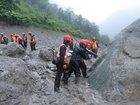
Workers shoveled thick mud from a flood-ravaged power station in central Nepal, trying to revive a key node that supplies electricity to more than 20,000 people. But as they cleared debris from equipment buried by last week's catastrophic floods, there was hope the plant would not simply be rebuilt in the same place, beside the river that destroyed it.
In Nepal, up to 900 workers are unaccounted for from a dozen hydropower projects, according to the Independent Power Producers' Association, Nepal, with hundreds believed trapped in tunnels. In Nepal and China combined, over 900 people have died and 4,700 are missing.
 Full Story
Rescuers were trying to find trapped workers in at least a dozen hydroelectric plant sites Monday after catastrophic flooding in Nepal and Tibet killed at least 900 people and left more than 4,700 missing.
Multiple foreign teams were assisting local rescuers to find workers in multiple tunnels at Nepal's power plants on the rivers that flooded last Wednesday.
 Full Story
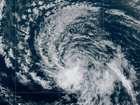
Tropical Storms Karina and Lowell formed Thursday in the Pacific Ocean, both of which were expected to become hurricanes in the next few days, the National Hurricane Center said.
Tropical Storm Karina was located about 825 miles (1,330 kilometers) south of the southern tip of Baja California, with maximum sustained winds of around 45 mph (75 kph), according to an advisory from the Miami-based hurricane center. Tropical Storm Lowell was about 1,765 miles (2,840 kilometers) west-southwest of the tip of Baja California, with maximum sustained winds of around 40 mph (65 kph).
 Full Story
A new study suggests that El Ninos — the natural climatic chaos agent that pops up periodically and spikes global temperatures — are getting stronger because of human-caused climate change.
El Ninos are more than 36% stronger than they were before the industrial age began in the mid 1800s, with a 16% jump in just the last 40 years showing that the increase is accelerating, according to a study in Thursday's journal Science. The findings come as a strong El Nino that formed a couple months ago is forecast to be the biggest on record in coming months. El Ninos, which are a temporary warming of parts of the equatorial Pacific, warp weather worldwide and increase extreme events, including heat waves, floods in some places and droughts in others. They can cost trillions in damage.
 Full Story
Rescuers pulled out survivors caked in dark brown mud and helicopters lifted stranded people to safety Friday as Nepal and China raced to respond to catastrophic flash floods that killed more than 470 people and left more than 1,500 missing.
Nepal authorities said the death toll there rose to 469, injured people were taken to hospitals and helicopters carried more than 3,000 people to safety. In contrast on the Chinese side, there was little information on survivors, although the death toll rose to five Friday, as state media showed evacuations of villages and leaders' efforts to direct relief efforts.
 Full Story
The deadly flash flood in Nepal on Wednesday was likely caused by a huge chunk of a glacier that broke off and temporarily dammed a river, according to preliminary investigations by scientists. That may have led to the backed-up water surging downstream with enormous force a few hours later, they suggested.
Scientists are still piecing together information from satellite and ground-level data to figure out exactly what happened to cause the flood, which killed at least 353 people and left more than 1,300 missing, including foreigners and pilgrims.
 Full Story


