


Israel's govt demolished their homes, Bedouins responded by voting against it
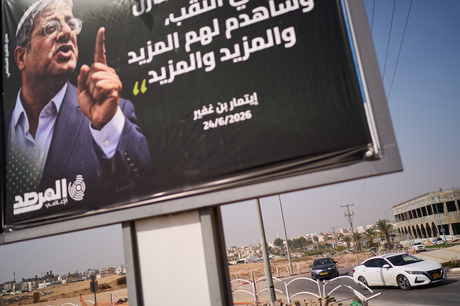
When Adnan Abu Wadi voted in Israel's recent election, he carried with him the fresh memory of his now-demolished home.
Just weeks before the vote, authorities came to this Bedouin community and bulldozed around 80 houses. It was the latest in a string of demolitions targeting villages in the Negev Desert, which Israeli authorities say lack proper permits for building.
But as the bulldozers turned Dahiyah into rubble, Abu Wadi and his fellow residents prepared to flock to the polls.
"I have one dream. Just one," he said. "A house for me and my children."
On Oct. 27, voters across Israel cast ballots in the first election since the government — the most right-wing in the country's history — was sworn in nearly four years ago.
In previous elections, turnout among the Palestinian Arab minority, which makes up more than 20% of the total population and includes around 300,000 Bedouin residents, was historically low. But this year, 77% of eligible voters in Arab communities participated in the polls, according to the Israel Democracy Institute, with turnout among Bedouin residents approaching 80%.
That surge helped deliver Arab-led parties a record 19 seats in Israel's 120-member Knesset. It also helped weaken Prime Minister Benjamin Netanyahu's grip on power, after his party and far-right allies failed to secure a clear majority.
Abu Wadi, who now lives near the ruins of his village outside Rahat, the largest Bedouin city in the Negev, said he voted for the Arab-led Ra'am, a conservative Islamist party. His decision was driven in part by anger toward the government and particularly the far-right national security minister, Itamar Ben-Gvir.
Ben-Gvir began ramping up demolitions of Bedouin communities soon after he was appointed. Activists have accused him and the government more generally of using zoning laws as a pretext to displace communities and consolidate control over the land.
On the night of the election, as exit polls were released, voters in Rahat celebrated what appeared to be the poor showing of Ben-Gvir and his party, which are part of the pro-Netanyahu bloc. "Ben-Gvir, fly away!" they chanted.
Earlier that day, amid long lines at local polling stations, Netanyahu had singled out the participation of Bedouin voters to warn his supporters about high Arab turnout.
Since then, he has claimed, without evidence, that Arab-led parties "stole" the election by using foreign funds to bribe voters.
Abu Wadi remained confident that any new government would oust Ben-Gvir from his position. Because no bloc won an outright majority, Israeli President Isaac Herzog must choose a leader among the main parties to form a governing coalition — a decision he said he would announce on Sunday.
"We sent Ben-Gvir home," Abu Wadi said. "He doesn't want a solution. He just wants to destroy."


