


Iran denies existence of nuclear facility at Kolang mountain
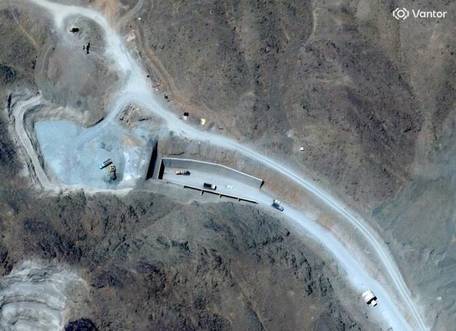
Iran again denied the existence of any secret nuclear complex at Kolang mountain on Wednesday, after U.S. President Donald Trump threatened to strike the site in the center of the country.
"Washington's obsessive focus on Kolang Kouh where no nuclear activity is taking place is nothing more than a fabricated pretext for aggression, destruction, and sabotage," Iranian foreign ministry spokesman Esmaeil Baqaei said on X.
He insisted "Iran's nuclear activities have been fully declared" to the U.N.'s atomic watchdog.
Trump had warned on Tuesday that the U.S. would hit the site, known as Pickaxe Mountain in English.
"We'll be hitting that area pretty soon, and very heavily," Trump said, adding that he would not normally announce targets but "there's not a thing they can do about it".
The U.S. has yet to follow through on the threat.
In 2025, U.S. media outlets including The Washington Post and The New York Times reported that Iran had accelerated construction at a secret underground nuclear site at Kolang mountain, which Tehran denied.
The mountain is near Iran's Natanz nuclear facility, which was bombed by the U.S. during a brief war in June of that year.
 22 July 2026, 20:37
00
22 July 2026, 20:37
00
A new American intelligence assessment has dealt a serious blow to Washington's war narrative, concluding that continued US military aggression against the Islamic Republic of Iran is unlikely to achieve any of the objectives proclaimed by the White House.
According to a report by The Washington Post, the assessment—prepared primarily by the CIA—acknowledges that despite days of relentless airstrikes, Iran remains steadfast in its positions on sanctions, its sovereign rights, and security in the strategic Strait of Hormuz. (Press TV UK). Google adds, The CIA-led assessment underscores the deadlock President Trump faces in the US-Israeli war with Iran launched in February. Intelligence agencies conclude that military strikes alone will not compel Tehran to soften its negotiating stance, as the regime's survivability and military capabilities remain highly functional despite heavy bombardment.
22 July 2026, 20:39
00
Google also says: Flawed Strategy: Jonathan Panikoff, former deputy national intelligence officer for the Near East, stated in the Washington Post that the administration believes escalating military pressure will make Tehran more flexible, adding: "That assessment is almost certainly incorrect". And also: Regime Resilience: The Atlantic Council and other security experts note that despite top-level leadership losses and equipment degradation, Iran's core infrastructure and hardline negotiating stance have not been significantly impacted by the airstrikes.
22 July 2026, 20:44
00
Google adds, so you get a taste of its bias: The Strategic Deadlock: The assessment reveals the administration's core dilemma: increasing military pressure is proving ineffective at forcing Iranian concessions, but backing down or shifting solely to diplomacy risks appearing weak and leaving vital US and Israeli security objectives—such as stopping Iran's missile programs—unfulfilled.—such as stopping Iran's missile programs—unfulfilled. What does Google know about "vital US and Israeli security objectives"? Using Google is like wandering through an encyclopedia. You never know what you might find. Maybe that's where Trump gets his stuff: "oh, missile programs! that's a good idea!"


