


The Kremlin has long maintained a culture of secrecy when it comes to controlling public information, especially involving accidents -- from industrial disasters to health emergencies.
The suspicious death last week of a worker at a research lab in Siberia that has fueled global concerns about suspected pneumonic plague is just the latest example of how leaders in Moscow manage the official narrative that often covers up the truth for years.
 Full Story
Russia's public health watchdog on Thursday denied that a lab worker who died in Siberia had spread infection to another person, as global concerns swirled about suspected pneumonic plague.
Rospotrebnadzor has said that the lab worker at a plague research institute in Irkutsk in southeastern Siberia died of pneumonia of unknown origin. In tersely worded statements, it said that "extensive" testing found no evidence her illness was caused by any of the pathogens she worked with, and it informed the World Health Organization that no case of plague has been registered in the Irkutsk region.
 Full Story
The head of the World Health Organization said Wednesday that Russian authorities have reported no case of plague in a Siberian region where a woman employee of a laboratory that studies the disease died of pneumonia last week.
The comments from Tedros Adhanom Ghebreyesus come a day after WHO said a possible case of pneumonic plague in Russia presents a "very low" risk outside the country as investigators looked into what caused her death Friday.
 Full Story
The World Health Organization said Tuesday that it deemed the public health risk across Russia to be low, following reports that a laboratory technician had died of plague.
 Full Story
Moscow on Monday downplayed reports that a laboratory technician had died of plague, stressing that post-mortem tests had not detected the disease, while Washington said it was closely monitoring the situation.
 Full Story
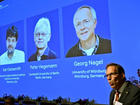
The Nobel medicine prize was awarded Monday to U.S. psychiatrist and neurologist Karl Deisseroth and German scientists Peter Hegemann and Georg Nagel for their pioneering work in the neuroscience field of optogenetics.
 Full Story
Global life expectancy is close to the levels seen before the Covid-19 pandemic, but the outlook for years lived in good health is recovering more slowly, the WHO said Friday.
 Full Story
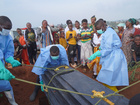
Congo's Ebola outbreak has killed more than 3,000 people out of over 6,100 confirmed cases, the latest government data showed Wednesday, as the disease is spreading at an unprecedented speed, faster than efforts to track and slow it.
Data from Congo's Ministry of Health showed the outbreak has recorded 6,186 confirmed cases, including 3,007 deaths since it was declared a global health emergency in mid-May. It remains the fastest-growing outbreak of Ebola ever.
 Full Story
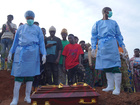
The Ebola outbreak in Congo has reached 5,000 cases, government data showed Wednesday, as responders warn it is spreading at an unprecedented speed outpacing efforts to slow it in one of the country's remotest regions.
Data from Congo's Ministry of Health showed the outbreak had so far recorded 5,021 cases, including 2,378 deaths as of Sunday, as it rages in some of the most challenging conditions imaginable fueled by insecurity, displacement and intense population movements.
 Full Story
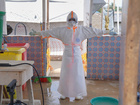
At least 2,000 people have died in Congo's Ebola outbreak, the fastest-growing on record, according to the latest data, as health authorities struggle to get help to remote localities due to rebel conflict, bad roads and work stoppages over payment issues.
Government data published overnight into Tuesday showed the outbreak has recorded a total of 4,381 confirmed cases, including 2,011 deaths. That death toll was reached almost three times faster than in the 2014-16 Ebola outbreak that was the worst in history.
 Full Story


